

How to Analyse a Football Match: 8 Things to Watch
To analyse a football match, you do not need to be a professional coach or spend the whole game staring at numbers. The skill is knowing what to watch, from the positions players take up to the reasons one team creates better chances than another.
Instead of following only the ball, try observing the spaces around it. Who is available for a pass? How does the opposition respond when possession is lost? What changes when a team takes the lead? This guide introduces eight practical ways to watch football with a more analytical eye.
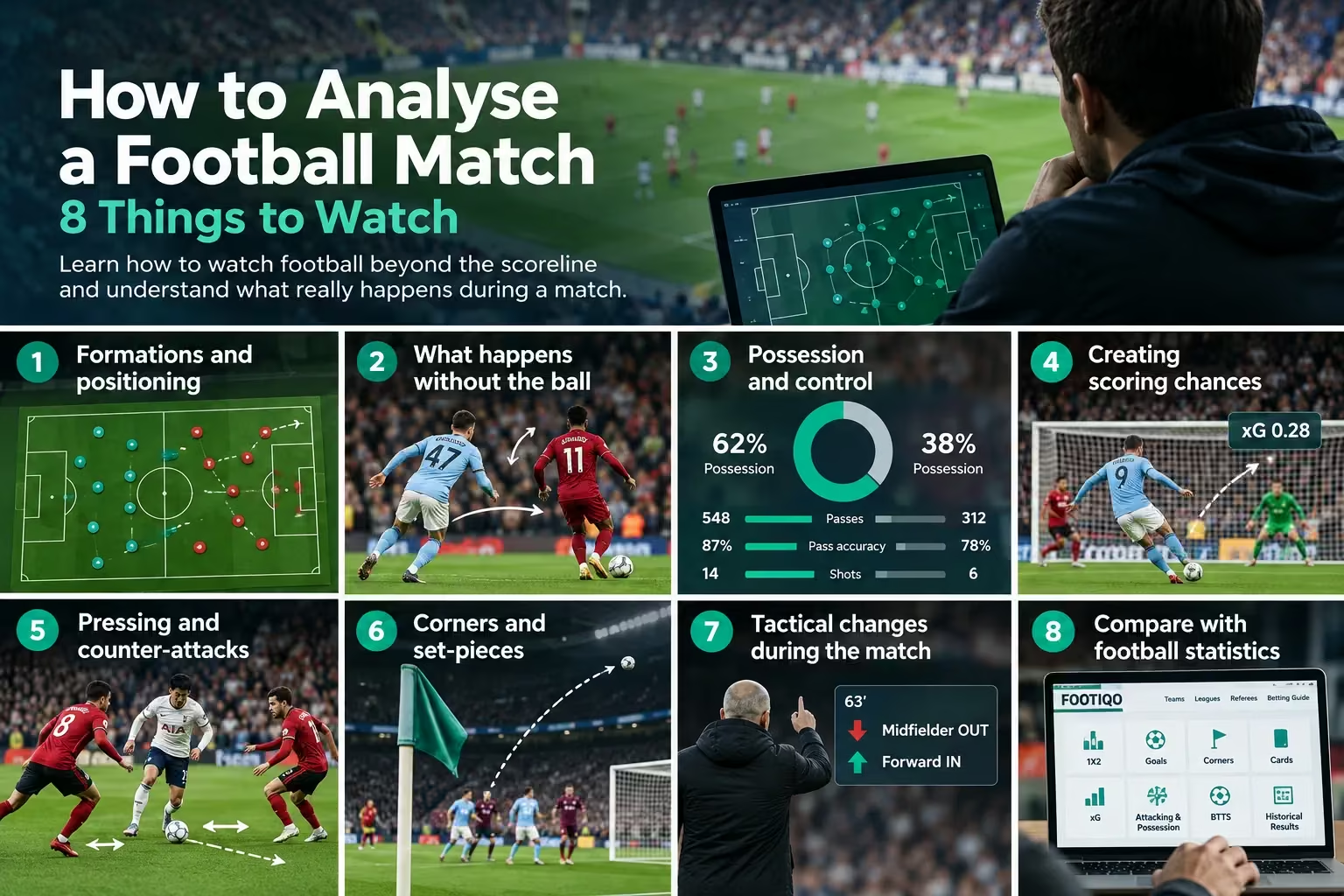
Eight things to watch during a football match
1. Start with formations, then look for how they change
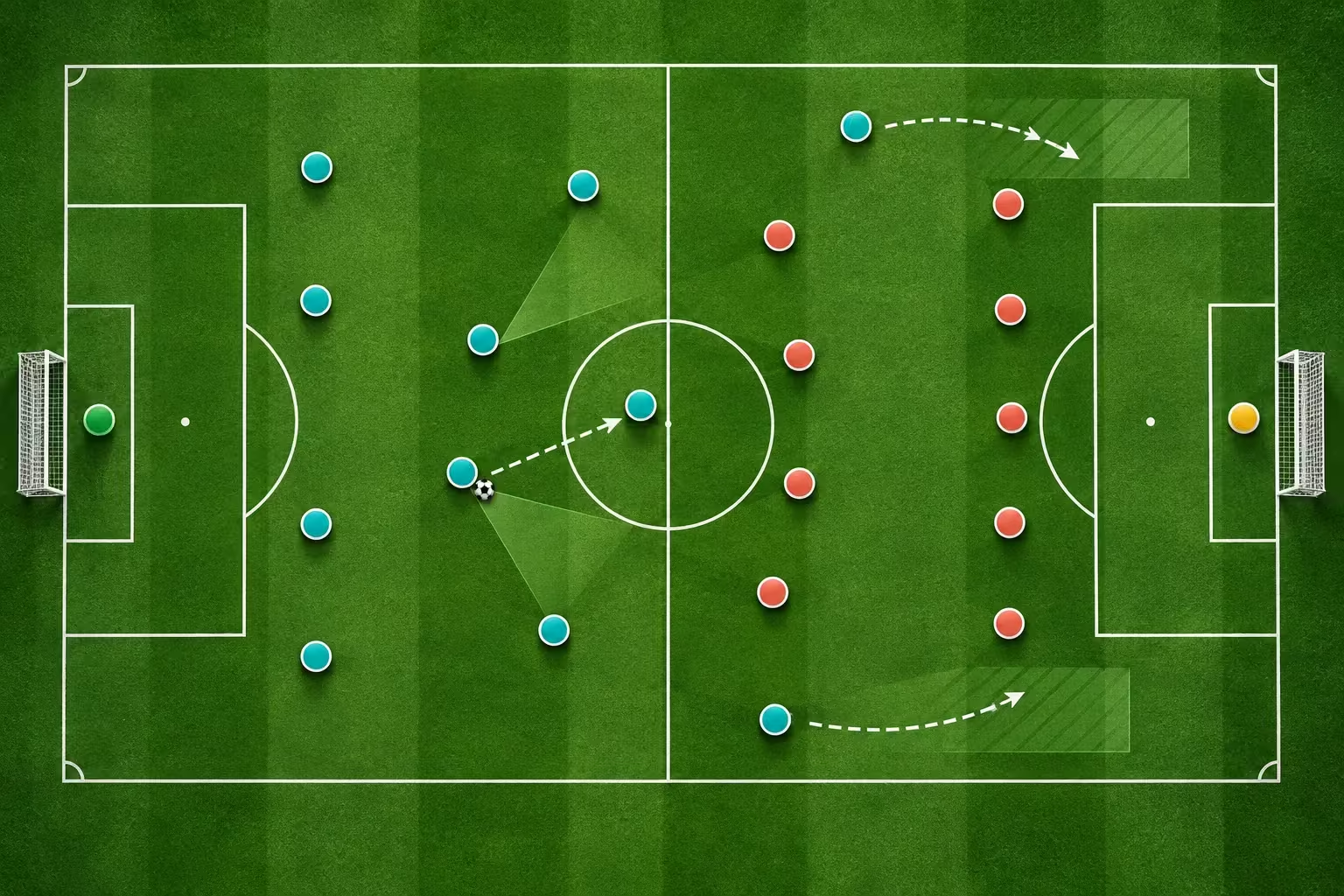
The starting line-up might be described as a 4-3-3, 4-2-3-1 or 3-5-2, but a formation is only a starting point. Teams rarely keep exactly the same shape in every phase of play. Full-backs move inside, wingers stay wide or drift centrally, and midfielders drop deeper to help build attacks.
In the opening ten minutes, look at the distance between the defenders, midfielders and forwards. Does one side push both full-backs high? Does a holding midfielder drop between the centre-backs? When possession changes, does the same team defend in a different formation?
What to look for: the positions players occupy when their team has the ball, and how quickly they recover their defensive shape after losing it.
2. Pay attention to players without the ball
A player can influence an attack without touching the ball. A forward making a diagonal run may drag a centre-back away, allowing a midfielder to arrive in the space left behind. A winger holding a wide position can stretch the defence even if the pass never comes.
Try watching one player away from the ball for an entire attacking move. Notice how they check their shoulder, change their running angle or create a passing option. Then watch what defenders do in response. The most important movement is not always the one highlighted in a replay.
Question to ask: who created the space that made the final pass or shot possible?
3. Separate possession from genuine control
A team with most of the ball is not automatically the more dangerous side. Possession can mean sustained pressure near the opposition penalty area, but it can also involve harmless passes between defenders while the other team protects its lead.
Look at where possession happens. Can the team progress through midfield? Does it receive the ball between the lines? Can it enter the penalty area, or is it forced to pass sideways? Meanwhile, a side with less possession may still control the spaces that matter and create quick counter-attacks.
After the match, compare your impression with Footiqo’s team possession and shooting statistics. They provide useful context, but no single percentage tells the complete story.
4. Judge the quality of chances, not only the shot count
Ten speculative shots from distance and ten clear chances close to goal are very different attacking performances. Consider each attempt: where was the shot taken, how much pressure was the attacker under, and did the goalkeeper have a clear view?
Watch the actions leading up to a chance, too. Was the defence pulled out of position by a switch of play? Did a through-ball split the back line? Did a rebound or a set-piece produce the opportunity? These details help explain why chances arose.
Expected goals (xG) offers another perspective by estimating the likelihood of a shot becoming a goal, based on the characteristics included in the underlying model. It does not tell you what will happen to any individual attempt. You can explore team xG statistics alongside goals scored and conceded, while remembering that differences across models and samples matter.
5. Notice the pressing triggers and the transition moments
Pressing is more than simply running towards an opponent. Organised teams often increase pressure after a particular trigger, such as a backward pass, a poor first touch or a pass towards the touchline. One player closes down the ball while others block the easiest passing routes.
Observe how many players join the press and what happens if it is beaten. Does the defensive line step up to keep the team compact? Is there space behind it for a counter-attack? Equally, watch the first few seconds after a turnover: some teams try to win possession back immediately, while others retreat into their shape.
Question to ask: is the team choosing when to press, or chasing the ball without support?
6. Look beyond the number of corners and set pieces
Corners, free-kicks and long throws give teams a chance to run routines that are difficult to create in open play. At a corner, watch whether attackers crowd the near post, attack the far post or wait around the penalty spot. Look for blockers, late runs and players positioned to collect a clearance.
A high corner count can signal territorial pressure, but it does not prove that a team is generating good chances. Delivery, timing and the ability to win the second ball all matter. If you want broader context, Footiqo’s team corner statistics let you compare tendencies across teams and matches.
7. Watch how the game changes after a goal or substitution
A match is not tactically static. When a team goes ahead, it may protect central spaces and invite the opposition forwards. The losing side might push a full-back higher, add another striker or take more risks in possession. Changes of personnel can also alter the shape without an obvious formation switch.
Rather than assuming that a substitution changed the match, look for a specific mechanism. Did the new player offer a passing outlet, stretch the defence or help recover possession? Remember that the scoreline, fatigue and the opponent’s adjustments may also explain what happens next.
For additional context, compare team win, draw and loss records across home and away matches. Those results show outcomes, not the tactical reasons behind them.
8. Use statistics to test what you think you saw
The purpose of statistics is not to replace watching the match. It is to challenge or support your observations. If a team looked dominant, did it also produce more attempts on target or higher-quality chances? If the opposition seemed comfortable defending, did it restrict dangerous opportunities despite having little possession?
Compare the numbers with the game state. A team chasing a goal may shoot more often because it is behind, not necessarily because its overall performance has improved. Individual matches can also be unusual, so compare them with a wider run of fixtures.
Footiqo’s Premier League historical match database is one place to explore match-by-match results and available statistics over multiple seasons. Use those figures as context, then return to the football itself.
A simple football match analysis checklist
You do not need specialist software. Keep a few notes during one match, then see whether your explanation still makes sense after the final whistle.
- Before kick-off: note the starting formations and which side is playing at home.
- First 15 minutes: identify each team’s build-up approach, defensive shape and pressing triggers.
- During open play: watch off-the-ball runs, progression through midfield and where chances are created.
- At set pieces: note routines, delivery areas and who wins the second ball.
- After a goal or substitution: record any clear positional or tactical change.
- After full-time: compare your observations with possession, shots, xG and the final result, where available.
Try writing a three-sentence summary: How did each team try to play? What created the best chances? What most clearly changed the game? Being able to answer those questions is more useful than memorising a long list of statistics.
Common mistakes when analysing a match
- Following only the ball: it hides the off-the-ball movements and defensive decisions that shape the next action.
- Equating possession with dominance: where and how the ball is used matters more than possession alone.
- Judging from the final score: the result records what happened, not necessarily how the chances were distributed.
- Overreacting to a single game: tactical patterns are easier to assess when you consider several matches and the strength of the opposition.
Frequently asked questions
How do beginners analyse a football match?
Start with just three things: each team’s shape, how chances are created and what happens immediately after possession is lost. Add more details as those observations become familiar.
What is the difference between watching and analysing football?
Watching is following the action and enjoying the contest. Analysing means asking why particular situations occur, observing patterns and checking whether the evidence supports your interpretation. Both can be part of the same experience.
Which statistics are most useful for match analysis?
Possession, shots, shots on target, xG, goals and corners can all be helpful when they answer a specific question. None should be treated as a complete measure of performance on its own.
Can you analyse football without expensive tools?
Yes. A live broadcast, a notebook and a clear set of questions are enough to begin. Public match records and team statistics can help you review your observations afterwards.
Final thoughts
The best way to watch football like an analyst is to stay curious. Look beyond the player on the ball, connect individual actions to the team’s shape, and notice how space, pressure and decisions change throughout a match.
Start with one or two of these eight ideas during your next game. Once the patterns become easier to spot, use match statistics to add context. You may find that the most revealing moments are not always the goals.
More Football Guides & Statistics from Footiqo
Enjoying these stats?
If you find this useful, share it with your mates on social media.
Contact Us
If you have any questions, or would like us to add specific leagues or betting markets, please contact us via our contact form or email us at support@footiqo.com. We’ll get back to you as soon as possible.